What is knee arthritis?
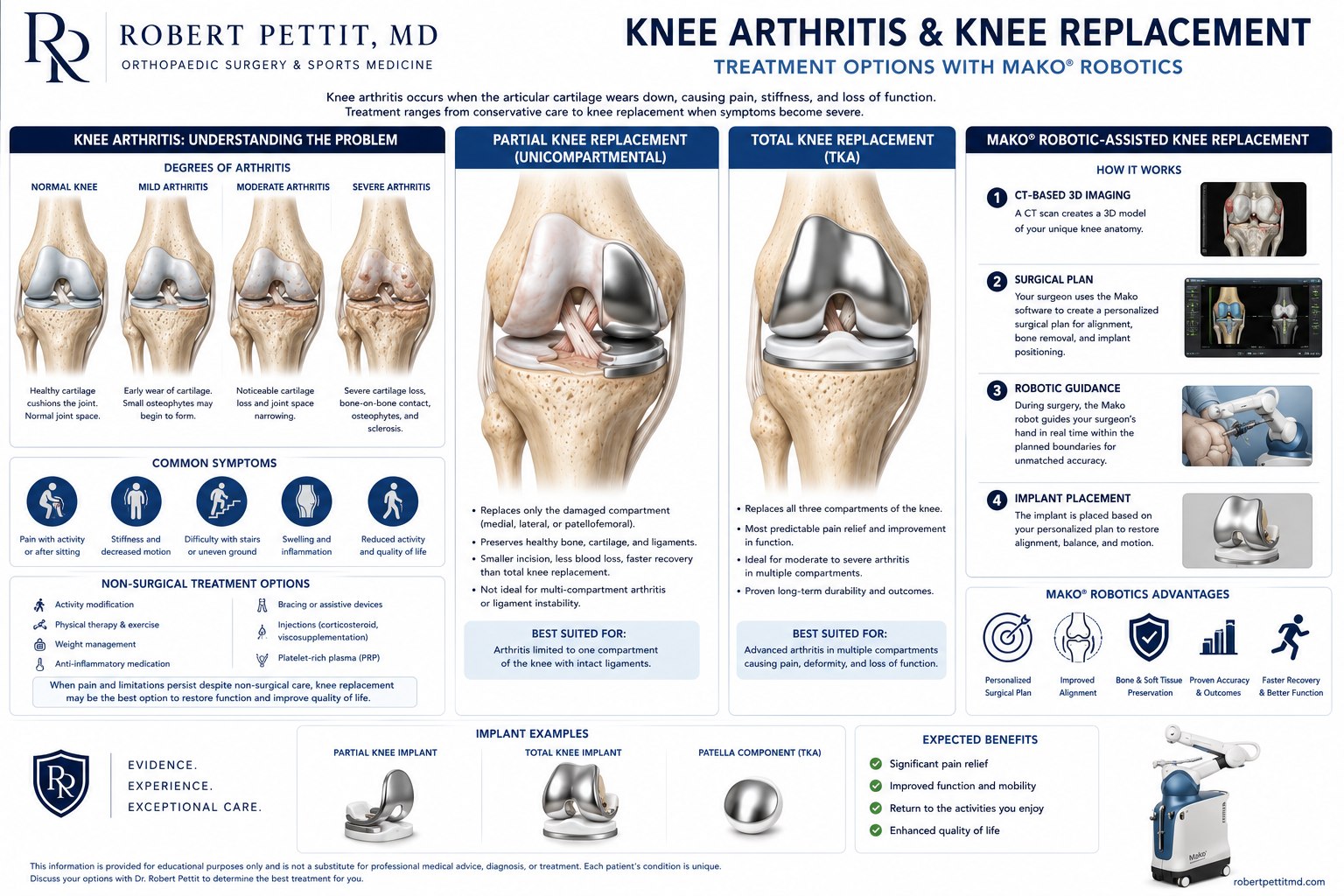
Knee arthritis is the gradual breakdown of the cartilage that cushions the joint, leading to pain, stiffness, and swelling. Osteoarthritis — the most common form — develops over years from wear, prior injury, or genetic factors. The knee has three compartments (medial, lateral, and patellofemoral); whether arthritis affects one, two, or all three shapes which treatments make sense, including whether a partial or total replacement is appropriate if surgery is ever needed.
Typical symptoms: pain that worsens with activity and improves with rest, morning stiffness, swelling and warmth, reduced motion, and a grinding sensation.
How is it evaluated?
Weight-bearing X-rays are the primary tool — they show joint-space narrowing, bone spurs, and alignment changes. MRI is used selectively, when a mechanical symptom such as locking or catching suggests an associated meniscus or cartilage problem.
Non-surgical treatment first
Most patients start — and many stay — on the non-surgical ladder: activity modification, weight management, physical therapy and a structured home exercise program, anti-inflammatory medication, and injections. Two injection options are offered in clinic:
- Gel injections (viscosupplementation) — hyaluronic acid to supplement the joint's natural lubricant. Read the gel injection handout.
- PRP (platelet-rich plasma) — concentrated platelets from your own blood; see the PRP & orthobiologics guide.
When conservative care isn't enough
When arthritis limits daily life despite good conservative care, the surgical options run in order of invasiveness:
- Realignment osteotomy — for younger, active patients with single-compartment disease and malalignment; preserves the native joint. See the knee osteotomy guide.
- Mako robotic partial knee replacement — resurfaces only the worn compartment, preserving the rest of your knee. See the partial knee guide.
- Mako robotic total knee replacement — for advanced multi-compartment arthritis. See the total knee guide.
If replacement is pursued, most patients walk with assistance within a day, progress strength and motion with therapy over weeks 2–6, and return to most low-impact activities by months 3–6.
Pain control after surgery
Frequently asked questions
Do I need a knee replacement right away?
Not necessarily. Most patients try activity modification, therapy, and other non-surgical measures first — many manage well for years without surgery.
How do I know if I need a partial or total replacement?
It depends on which compartments of your knee are affected, determined by exam and weight-bearing X-rays with Dr. Pettit.
Do gel or PRP injections actually help?
Many patients get meaningful, months-long relief, particularly in mild-to-moderate arthritis. They don't regrow cartilage, but they can defer surgery while keeping you active.
What makes Mako robotic replacement different?
A CT-based 3D plan of your knee guides the robotic arm during surgery, allowing implant positioning personalized to your anatomy with protection of surrounding soft tissue.