ACL reconstruction in Cincinnati and Northern Kentucky
Dr. Robert Pettit is a fellowship-trained sports medicine surgeon who reconstructs torn ACLs for high-school, college, and professional athletes and for adults who simply want a stable knee back. He uses the cutting-edge technology and minimally invasive arthroscopic techniques for optimal outcomes.
- Board certified, ABOS
- Sports medicine fellowship, Harvard & Tufts (NEBH)
- Cutting-edge technology, minimally invasive techniques
- Same-week appointments
- 4.9★ · 361 Google reviews
Is this surgery right for you?
- Your knee gave out or you heard a pop during a cut, pivot or landing, and it has felt unstable since.
- An MRI shows a complete ACL tear, or your knee keeps buckling despite bracing and therapy.
- You want to return to cutting or pivoting sports, or you have a meniscus tear alongside the ACL that needs to be protected.
If you are not sure, that is what the first visit is for. Most conditions are evaluated with an exam and X-rays; Dr. Pettit orders an MRI only when it will change your plan.
At a glance
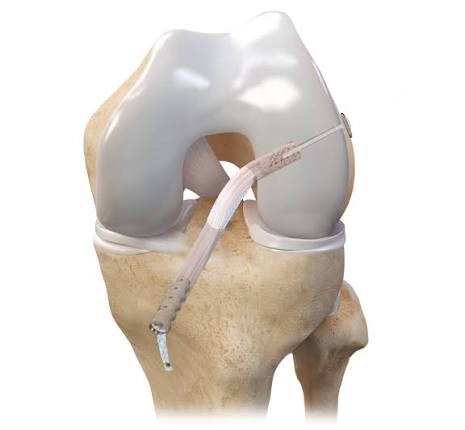
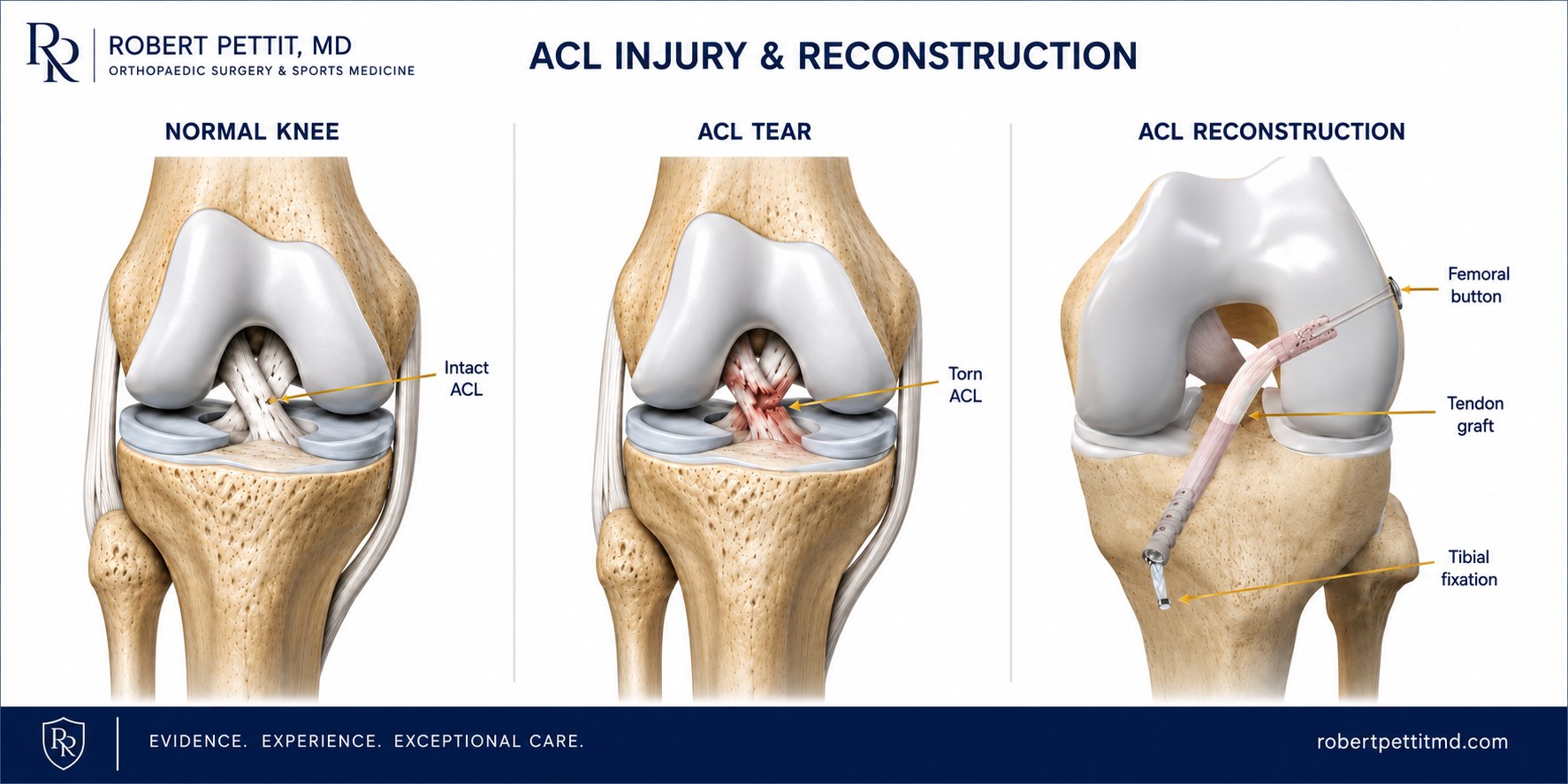
Tap to open the full-size infographic.
How Dr. Pettit approaches acl reconstruction
Graft choice made for your knee, not by habit
Quadriceps tendon, bone-patellar tendon-bone and allograft each have a place. Dr. Pettit walks you through the trade-offs for your age, sport, and anatomy, and you decide together. Younger, high-demand athletes are usually steered toward their own tissue.
The meniscus and cartilage are treated at the same time
Roughly half of ACL tears come with a meniscus tear. Repairing it during the same arthroscopy, rather than removing it, protects the knee for the long run. Dr. Pettit published on cartilage injury at the time of ACL reconstruction and treats it as part of the operation, not an afterthought.
A return-to-sport program, not just a discharge date
You are cleared by strength testing, hop testing, and readiness, not by the calendar alone. The illustrated ACL return-to-sport program on this site is the same one his patients follow with their therapist.
Pain control built around Journavx, not opioids
Dr. Pettit pairs a nerve block with Journavx (suzetrigine), the first new non-opioid prescription pain medicine in decades, alongside scheduled Tylenol and an anti-inflammatory. Most patients use little or no narcotic medication, which means clearer thinking, less nausea, and an earlier return to normal activity.
What recovery looks like
- Weeks 0–2Brace and crutches, early motion, quad activation. Physical therapy starts within the first week.
- Weeks 2–6Walking without crutches as strength returns; full extension and bending are the priority.
- Months 2–6Progressive strengthening, then running and agility once the knee is strong and quiet.
- Months 9–12Return to cutting sports after passing strength and hop testing.
Timelines are typical, not promises. Your written protocol is individualized to what Dr. Pettit finds at surgery.
Go deeper
Patient guide: the condition, treatment options and evidence
Preparing for surgery: medications, day-of instructions
Post-operative protocol and physical therapy plan
Journavx before surgery: the non-opioid pain medicine we prescribe
“I tore my ACL and Dr. Pettit helped me figure out the best treatment and scheduled surgery quickly. He followed up with me weekly during rehab. His care has been absolutely amazing.”
Verified patient, ACL reconstruction
Questions patients ask
Do I need surgery for a torn ACL?
Not everyone does. Athletes in cutting or pivoting sports, people with a knee that keeps giving way, and those with a repairable meniscus tear usually benefit from reconstruction. Dr. Pettit will tell you if you are a candidate for non-operative care.
Which graft is best?
There is no single best graft. Quad tendon and patellar tendon autografts have the lowest re-tear rates in young athletes; allograft avoids a donor site and suits lower-demand adults. The choice is made with you at your consultation.
How soon after injury should I have surgery?
Usually once swelling has settled and motion has returned, often 2–6 weeks after injury. A locked knee from a displaced meniscus tear is scheduled sooner.
When can I drive?
Left knee with an automatic car: usually about 1–2 weeks. Right knee: once you are off pain medication and can brake normally, typically 4–6 weeks.
Is the surgery done as an outpatient?
Yes. ACL reconstruction is an outpatient arthroscopic procedure done with a nerve block and general anesthesia, and you go home the same day.
See Dr. Pettit this week
Book directly into Dr. Pettit's schedule, or leave your details and our team will call you within one business day.
Book online now (513) 354-3700Most major insurance plans accepted, including Medicare. Bring any imaging you already have.
- Fort Thomas, KY, 775 Alexandria Pike (Mon & Tue AM, Thu PM)
- Beacon East, Anderson (Tue PM)
- Red Bank, Hyde Park (Thu AM)
- Beacon West, Western Hills (Wed AM)
- Finneytown (Mon PM)