Why shoulders re-dislocate
A first dislocation usually tears the labrum — the cartilage bumper that deepens the socket (a Bankart tear). Once torn, the shoulder loses its checkrein; in athletes under 25, recurrence rates without repair are high. Repeated dislocations also erode bone from the socket rim, which changes the operation you need.
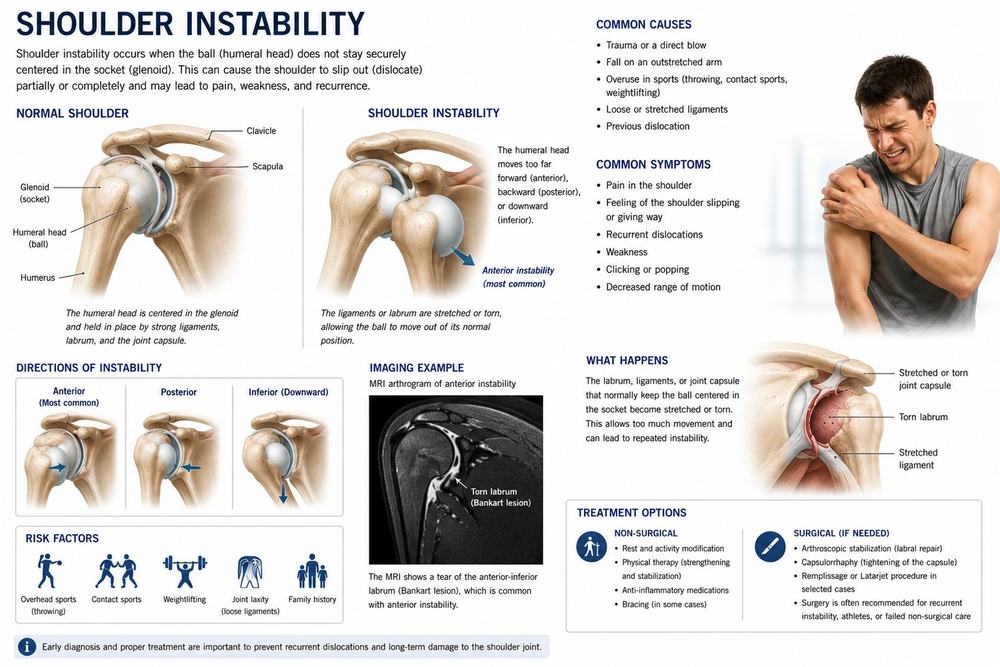
Arthroscopic labral (Bankart) repair
For instability without significant bone loss, Dr. Pettit reattaches the torn labrum to the socket rim arthroscopically with suture anchors, restoring the bumper and tensioning the capsule. A sling protects the repair for six weeks while early protected motion begins, with return to contact sport typically at four to six months after passing strength and stability testing.
Latarjet for bone loss
When the socket has lost bone or a previous repair has failed, soft-tissue repair alone isn’t enough. The Latarjet procedure transfers the coracoid bone block — with its attached tendons — to the front of the socket, rebuilding the bone and adding a dynamic sling effect. It carries the lowest recurrence rates for high-risk shoulders. The graft heals over six to eight weeks (sling for six, including sleeping), with contact sport no earlier than six months.
Return-to-sport testing
Clearance is earned with objective criteria — strength of at least 80–90% of the other side, full functional motion, and sport-specific progression — because early return to provocative positions is the main failure mode.
Pain control after surgery
Frequently asked questions
My shoulder popped out once — do I need surgery?
It depends on your age, sport, and anatomy. Young contact-sport athletes have the highest recurrence risk and benefit most from early stabilization; older or lower-risk patients may do well with rehab. An MRI defines the damage and guides the call.
What’s the difference between Bankart and Latarjet?
Bankart repair re-stitches the torn labrum — ideal when the bone is intact. Latarjet rebuilds deficient socket bone with a transfer of the coracoid — the choice for significant bone loss or failed prior repair.
How long until I can play contact sports?
After Bankart repair: typically four to six months with completed testing. After Latarjet: a minimum of six months, with throwers returning to competition closer to nine.
What about SLAP tears?
SLAP tears involve the top of the labrum at the biceps anchor and often accompany instability or biceps symptoms — treated with repair or biceps tenodesis depending on age and demand.