Knee cartilage restoration and joint preservation in Cincinnati
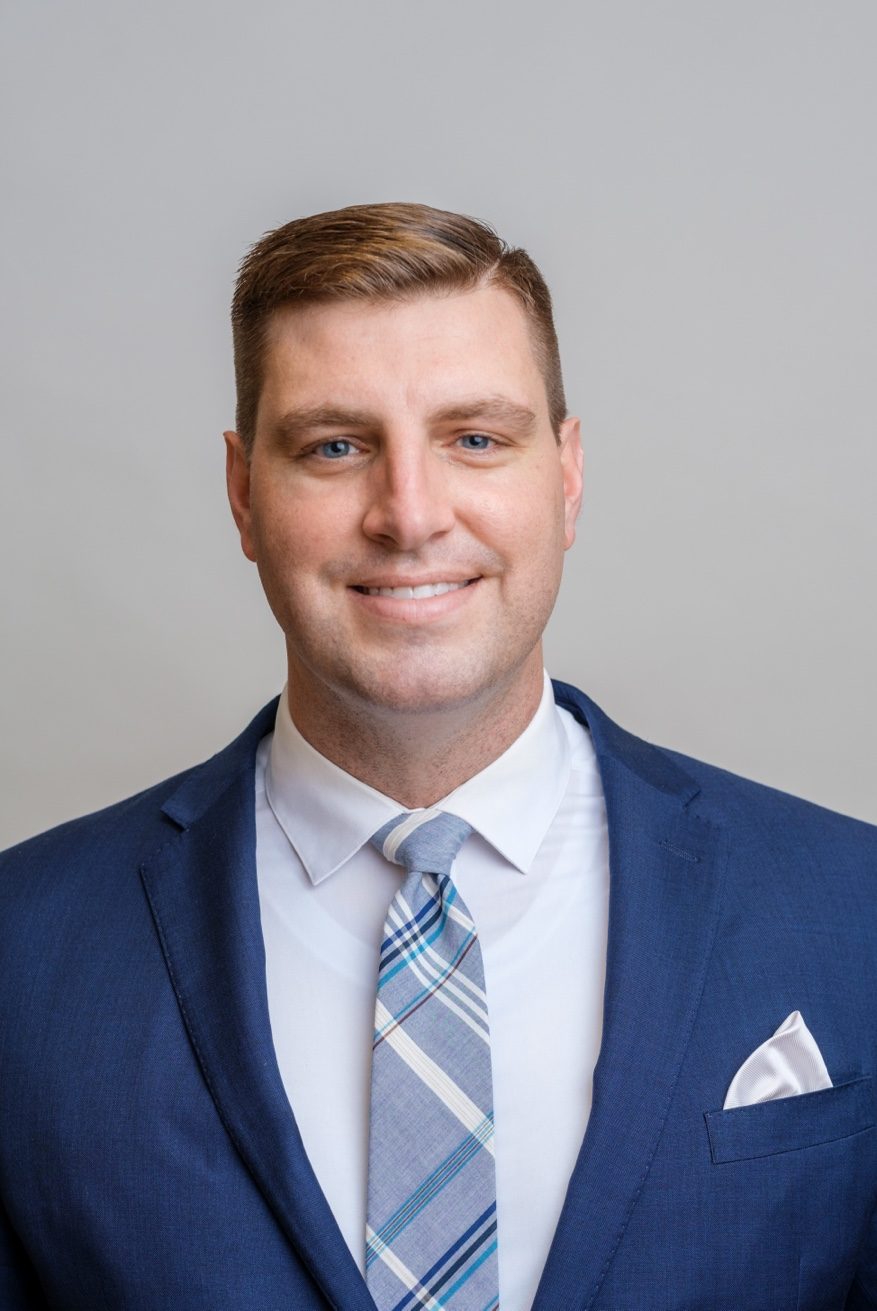
Dr. Robert Pettit's clinical focus is preserving the native knee in young and active patients. He treats cartilage defects with the technique that fits the lesion, and has published research on cartilage injury and its progression.
- Board certified, ABOS
- Sports medicine fellowship, Harvard & Tufts (NEBH)
- Cutting-edge technology, minimally invasive techniques
- Same-week appointments
- 4.9★ · 361 Google reviews
Is this surgery right for you?
- You are under about 50, active, and have a focal cartilage defect or osteochondritis dissecans rather than diffuse arthritis.
- Pain, swelling, and catching persist after therapy, injections, or a prior arthroscopy.
- You have been told you are too young for a knee replacement and want a real alternative.
If you are not sure, that is what the first visit is for. Most conditions are evaluated with an exam and X-rays; Dr. Pettit orders an MRI only when it will change your plan.
At a glance
How Dr. Pettit approaches cartilage restoration
The technique matches the lesion
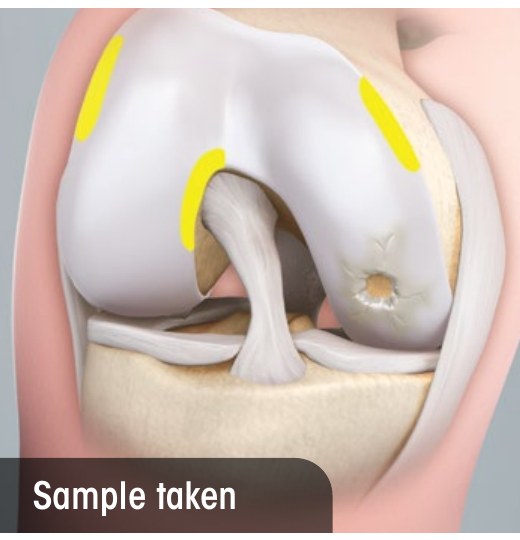
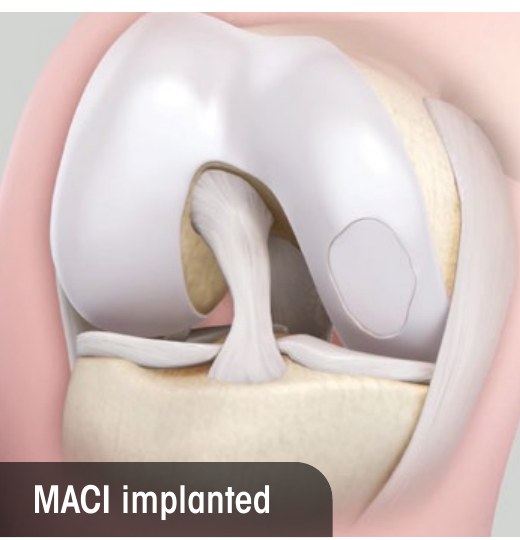
Small lesions may suit marrow stimulation with BioCartilage. Medium defects are treated with an osteochondral autograft (OATS). Larger or deeper defects are treated with MACI, in which your own cartilage cells are grown and implanted, or with a fresh osteochondral allograft. Dr. Pettit will show you the size and location on your MRI and explain why one option fits.
Alignment and the meniscus are corrected, or the graft fails
A cartilage graft in a bow-legged or knock-kneed knee wears out. When alignment is off, a high tibial or distal femoral osteotomy is planned alongside the cartilage work. Missing meniscus tissue is addressed with meniscal transplant when needed.
Biologics to augment cartilage healing
Marrow-stimulation procedures depend on your own cells, and grafts need a healthy healing environment. Dr. Pettit augments cartilage procedures with platelet-rich plasma (PRP) and bone marrow aspirate concentrate (BMAC), stem-cell-rich marrow drawn from your pelvis during the same anesthetic, to improve the quality of the repair tissue.
Research-informed timing
Dr. Pettit's published work showed that cartilage defects enlarge while patients wait for treatment. When restoration is indicated, he moves efficiently from decision to surgery.
Pain control built around Journavx, not opioids
Dr. Pettit pairs a nerve block with Journavx (suzetrigine), the first new non-opioid prescription pain medicine in decades, alongside scheduled Tylenol and an anti-inflammatory. Most patients use little or no narcotic medication, which means clearer thinking, less nausea, and an earlier return to normal activity.
What recovery looks like
- Weeks 0–6Protected weight bearing on crutches and a motion machine or frequent gentle bending to nourish the healing cartilage.
- Weeks 6–12Gradual return to full weight bearing and strengthening, guided by the specific procedure protocol.
- Months 3–6Low-impact conditioning: cycling, elliptical, pool.
- Months 9–18Return to impact and sport as the graft matures; MACI takes the longest.
Timelines are typical, not promises. Your written protocol is individualized to what Dr. Pettit finds at surgery.
Go deeper
Patient guide: the condition, treatment options and evidence
Preparing for surgery: medications, day-of instructions
Post-operative protocol and physical therapy plan
Journavx before surgery: the non-opioid pain medicine we prescribe
PRP and biologics: Dr. Pettit's guide
MACI and Dr. Pettit's research: why timing matters
Dr. Pettit is first author of a study of 128 knees awaiting cell-based cartilage repair (Cartilage, 2021). Waiting was not neutral: defects grew about 0.11 cm² for every month between biopsy and implantation, and 16% of patients formed a new high-grade cartilage lesion while they waited. That is why, once restoration is the plan, his team moves quickly through authorization and scheduling.
MACI patient resources
MACI welcome guide: what happens from biopsy to implant
Why cartilage damage does not heal on its own
MACI rehabilitation manual (for you and your therapist)
Summary of Dr. Pettit's "Time Matters" study
Materials provided by Vericel, the maker of MACI. Individual results vary; see the Important Safety Information in each document.
MACI rehab at a glance
- 0–3 monthsAchieve routine: crutches and brace early, full weight bearing by about 7–9 weeks, driving and desk work.
- 3–6 monthsBuild strength: cycling, elliptical, swimming, golf; more physical jobs.
- 6–9 monthsBe active: running program, low-impact sports; heavy labor.
- 9–12+ monthsCutting, pivoting and contact sports as the graft matures and testing allows.
Questions patients ask
What is MACI?
Matrix-induced autologous chondrocyte implantation. A small cartilage biopsy is taken during an arthroscopy, your cells are cultured, and a few weeks later they are implanted into the defect on a collagen membrane.
Am I too old for cartilage restoration?
Results are best in patients under about 50 with a focal defect and healthy surrounding cartilage. Age is one factor; the pattern of damage matters more.
Will it prevent a knee replacement?
The goal is to delay or avoid one. Many patients return to full activity; some will still need a replacement years later, but with the operation done at a more appropriate age.
Is an osteotomy a big surgery?
It is an open procedure with a plate, and recovery takes longer than an arthroscopy. It is often the single most important step in making a cartilage procedure last.
Does insurance cover MACI?
MACI is FDA-approved and covered by most plans with prior authorization. Greg Woodard, Dr. Pettit's surgery scheduler, handles the authorization for you.
See Dr. Pettit this week
Book directly into Dr. Pettit's schedule, or leave your details and our team will call you within one business day.
Book online now (513) 354-3700Most major insurance plans accepted, including Medicare. Bring any imaging you already have.
- Fort Thomas, KY, 775 Alexandria Pike (Mon & Tue AM, Thu PM)
- Beacon East, Anderson (Tue PM)
- Red Bank, Hyde Park (Thu AM)
- Beacon West, Western Hills (Wed AM)
- Finneytown (Mon PM)