Preparing for Your OATS (Osteochondral Autograft)
01A Message From Dr. Pettit
Thank you for allowing us to serve in your care. Our number one goal, along with our team at Beacon Orthopaedics and Sports Medicine, is to improve your quality of life through our knowledge, skill, experience, and — most importantly — compassionate care. OATS (Osteochondral Autograft) is a highly effective procedure, but we recognize that surgery can be stressful, and we hope to make this process as smooth as possible.
This guide is a resource to help you and your loved ones understand your oats (osteochondral autograft), prepare for the day of surgery, and know what to expect during your recovery. Please keep it with you up to your date of surgery and beyond. Our team is always here to answer your questions — please do not hesitate to contact us about anything.
Robert J. Pettit, MD
02About Your OATS
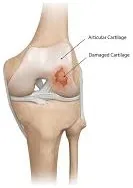
(OSTEOCHONDRAL AUTOGRAFT) OATS (osteochondral autograft transfer) treats a cartilage-and-bone defect by transferring one or more plugs of healthy cartilage and bone from a low-contact area of your own knee into the damaged area. Because it moves living cartilage with its bone, it restores a true cartilage surface.
OATS transfers a plug of healthy cartilage and underlying bone from a less weight-bearing area of your own knee into a cartilage defect, providing an immediate, durable, load-bearing cartilage surface.
Want to see how the procedure is done? Watch an animation and read more at Orthopedia patient education.
03Is This the Right Procedure for You?
Why it may be recommended
- Small-to-moderate focal cartilage defects, often with underlying bone involvement
- Patients seeking a single-stage procedure using their own tissue
- Defects not well suited to microfracture alone
What it is intended to achieve
- Provides mature, native cartilage rather than repair tissue
- Single-stage procedure using the patient's own tissue
- Good option for defects with bone involvement
04Risks to Understand
Risks include infection, stiffness, donor-site discomfort, and graft-fit or integration issues. Dr. Pettit will explain how graft size and location factor into your specific plan.
05In the Weeks Before Surgery
- Complete your pre-operative clearance. Depending on your age and health, you may need lab work, an EKG, or a visit with your primary care doctor or cardiologist. Our surgery scheduler will tell you exactly what is required
- Review your medications with us. Blood thinners (such as warfarin, Eliquis, Xarelto, Plavix, or aspirin) and certain supplements may need to be stopped before surgery — but never stop a prescribed medication without instruction from the prescribing doctor
- Stop nicotine. Smoking and vaping slow healing. Stopping even a few weeks before surgery improves your recovery — this is especially important for tendon, ligament, cartilage, and bone healing
- Arrange a ride and a helper. You cannot drive yourself home after anesthesia. Plan for a responsible adult to drive you and to stay with you the first night
- Prepare your home. Set up a comfortable recovery area with everything within reach, clear tripping hazards and loose rugs, and stock easy meals. If you will use crutches, a walker, a sling, or a brace, practice with it ahead of time
- Fill prescriptions early. If Dr. Pettit sends pain medication or other prescriptions before surgery, fill them ahead of time so they are ready when you get home.
- Stop NSAIDs and blood thinners as directed
- Arrange a ride home and help for the first few days
- Follow fasting instructions before surgery
06The Day of Surgery
Greg Woodard, our surgery scheduler, will give you your exact arrival time and location, and will tell you when to stop eating and drinking — generally nothing to eat or drink after midnight the night before, unless you are told otherwise. Take only the medications we tell you to take, with a small sip of water. Leave jewelry and valuables at home, wear loose, comfortable clothing, and bring your photo ID, insurance card, and this guide. Most of our procedures are outpatient, meaning you go home the same day. You will meet the anesthesia team before your procedure to review your anesthesia plan and answer any questions.
07What to Expect After Surgery
- You will be limited in weight-bearing early, often with crutches and sometimes a brace, to protect the transferred plugs as the bone heals in
- Physical therapy restores motion first, then gradually adds strengthening and impact
- Return to sport is typically several months, guided by healing on imaging and function
- Follow protected weight-bearing instructions closely
- Use a CPM machine if prescribed
- Ice and elevate to manage swelling
- Begin physical therapy per your protocol
Recovery timeline
- Weeks 0–6: protected weight-bearing
- Months 2–4: progressive strengthening
- Months 4–8: gradual return to impact activity
- Return to sport is individualized based on graft healing
08Post-Op Quick Reference
Keep this section for after your surgery. These highlights are drawn from Dr. Pettit's OATS Trochlea post-operative protocol — your procedure may use a different variant, so always follow the copy you receive at surgery.
Medication management
You have been given a regional anesthetic block prior to your operation; this will wear off in the evening following your surgery. We recommend taking pain medication once you feel the block wearing off. You may find it beneficial to sleep in a recliner or propped up with pillows in the days following surgery.
- Journavx (Suzetrigine): You have been prescribed Journavx (Suzetrigine) — this is a nonopioid medication to help control your pain. This medication comes from Sycamore Hills Pharmacy in Blue Ash, Ohio, and they will deliver it to your home — it will not be part of your other surgical medication bundle from your regular pharmacy. Please look out for a text from Sycamore. You can take Oxycodone for severe pain as needed every 4-6 hours, in addition to the Journavx and Tylenol/Motrin. If you take hormonal birth control, you will need to use a back-up method while taking Journavx.
- DO NOT drive/use any heavy machinery, drink alcohol, make any life-changing or legal decisions (i.e. sign a will), or participate in activities that require a lot of physical skill, as narcotics may change your mental acuity. On rare occasions they may cause confusion or disorientation, we advise you to discontinue this medication should that occur.
- Narcotics can be addictive. Dispose of any excess medication at a police/fire station.
- Take a stool softener (e.g. Colace) while taking narcotic medication, as narcotics may cause constipation. If this does not help alleviate your constipation, you can try adding miralax or milk of magnesia. Please call our office if this regimen does not alleviate your constipation.
- If you have any questions or concerns about narcotic strength medications, please contact us.
Tylenol and Celebrex/Ibuprofen are the foundation for your pain control regimen. Example dosing: 1000mg Tylenol then 4 hours later 800mg Ibuprofen then 4 hours later repeat — every 4 hours alternate between Tylenol and Ibuprofen. Oxycodone as needed for breakthrough pain. *You should not exceed 3,000mg of Tylenol or 3,200mg of Ibuprofen in 24 hours.
Crutches & Weight Bearing Status
- Following a Cartilage Repair, you will need crutches for 6 weeks (Have your brace locked in extension at this time). At 6 weeks we will ease you back into normal walking without crutches
- When you are able to ambulate without a limp and feel comfortable doing so, you can safely discard the crutches and walk unassisted
Follow-up appointment
- Your first post-operative appointment will be scheduled within 7 days following your surgical procedure. Your first post-operative appointment will be scheduled 5-7 days following your surgical procedure. Typically, dissolvable sutures are used during surgery, and do not need to be removed. If you do have sutures that need to be removed, this will occur at your first post-operative visit. If you do not have a post-operative appointment scheduled when you leave following surgery, please call 513-354-3700 to make the appointment or 513-441-5639 (direct line to Dr. Pettit’s office) ***
Call 911 and go to the nearest hospital if you are having chest pain or trouble breathing.
Call the office at 513-354-3700 to report any of the following:
- Persistent fever (101 or greater)
- Sudden increase in pain and swelling
- Wound redness or drainage (besides blood)
- Increased skin temperature around incision
- Deep calf pain and swelling
- Severe abdominal pain
09Common Questions
10Questions & Scheduling
Once you and Dr. Pettit decide on surgery, Greg Woodard, our surgery scheduler, will handle your surgery date, insurance authorization, pre-operative clearances, and exact arrival instructions. Maria Dodd, PA-C helps manage your recovery — medications, imaging, and questions — throughout.
Surgery scheduling & direct office line: (513) 441-5639 · Main office: (513) 354-3700
